سیستم های فرایندی از سفارش تا فروش مزایا و فرصتها
WHAT IS O2C?
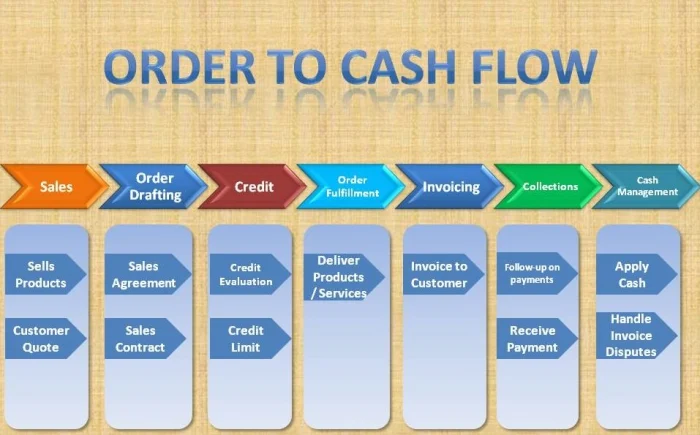
(O2C) is the critical end-to-end process spanning elements of sales order management, supply chain, and finance that at its essence involves an organization exchanging goods or services for payment. For more information on these topics, see APQC’s latest research collection “Transformation in Order-to-Cash.” In order to improve the end-to-end process of O2C, it is first helpful to define it, and the benefits of end-to-end O2C process management listed above can help organizations create a business case to progress in their end-to-end O2C process management journey. An integral part of the customer experience with the organization from start to finish, O2C is crucial to an organization’s ability to e ectively and e ciently earn revenue for products and services delivered. O2C is part of a set critical end-to-end processes within an organization, including idea-to-market, procure-to-pay, hire-to-retire, and record-to-report. Improvement in process measures, such as a reduction in cash-to-cash cycle time, decreased errors and issues related from upstream or downstream in the process, and improved customer/stakeholder service quality across the end-to-end touchpoints CUSTOMER ORDER CUSTOMER CREDIT ORDER FULFILLMENT INVOICING PAYMENTS AND COLLECTIONS CASH ORDER For More Information: BENEFITS OF MANAGING O2C as an End-to-End Process Managing O2C as an end-to-end process has many benefits, including: Stronger governance and increased clarity of roles and responsibilities for the overarching process, the component processes, and the hando s Improved cross-functional collaboration across departments Reduced process variability Only about a quarter of respondents (26%) report that O2C is managed and improved mostly as an end-to-end process or value stream across the majority of the enterprise, with 45 percent reporting that some work e ort has taken place to manage and improve O2C as an end-to-end value stream in some parts of the business. O2C is managed and improved mostly as an end-to-end process or value stream across the majority of the enterprise. Some work e ort has taken place to manage and improve O2C as an end-to-end value stream in some departments, business units, or regions of the organization. Individual O2C processes are predominantly managed and improved as siloed processes. 26% 45% 30% PROGRESS IN MANAGING O2C as an End-to-End Process While there are many benefits to managing O2C as an end-to-end process, survey respondents in the “Transformation in Order-to-Cash” study still have some work to do to move up the O2C process management maturity curve. N=74 Benefits of O2C End-to-End Process Management APQC conducted a research e ort (“Transformation in Order-to-Cash”) to understand the state of Order-to-Cash (O2C) process transformation and how leading organizations are working to transform, manage, and improve O2C as an end-to-end value stream.
https://www.apqc.org/system/files/resource-file/2020-10/K010989%20Benefits%20of%20O2C%20End-to-End%20Process%20Management.pdf
